
How to plan a family school holiday road trip
Plan the route, stops and arrival before booking a full day of activities at the destination. A map’s driving estimate is not the whole family journey: add rest, food, toilets, fuel and a buffer for conditions. Use official traffic and park alerts, then plan the trip home around the earlier student return.
Turn a route into a day plan
| Part | What to record | What to verify |
|---|---|---|
| Before departure | Route, intended stops and destination check-in | Current traffic, closures and conditions |
| First leg | A manageable driving segment | An appropriate rest stop before it is needed |
| Break | Rest, toilets, food or fuel as needed | Facilities and access at the actual stop |
| Later leg | Revised arrival with a buffer | Conditions again if the route or weather changes |
| Return trip | Last travel day and first student attendance | School-specific notices and the household that returns earlier |
Use official route information
Queensland’s journey-planning guidance provides road-region maps, traffic information and rest-area resources. It encourages a break at least every two hours for at least 15 minutes. Plan stops before setting out rather than relying on children to wait until the destination.
Use the equivalent official road information for every jurisdiction on your route. Recheck closures and conditions before departure and as plans change; a saved route does not confirm that every road remains open.
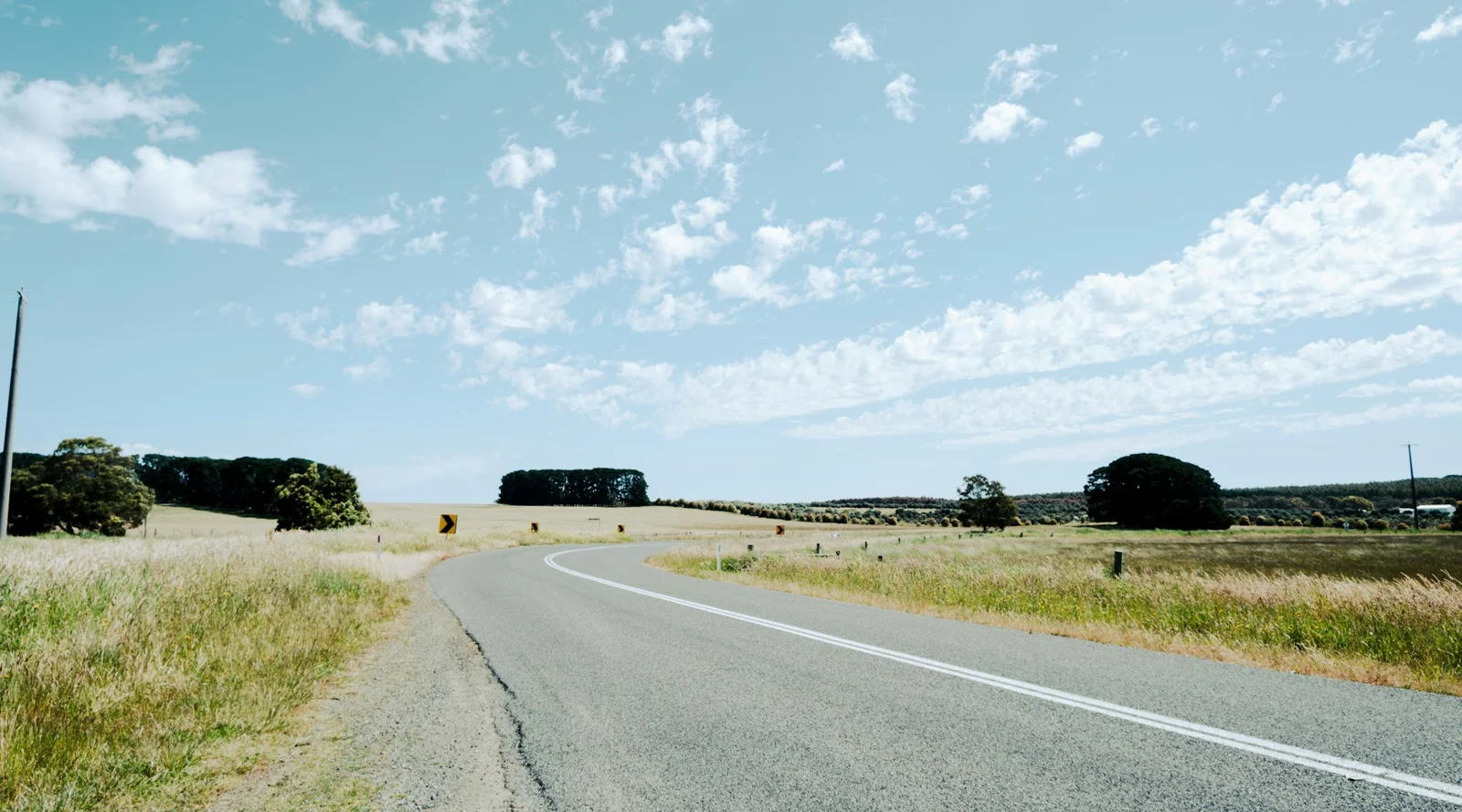
The feature photograph illustrates an Australian country road, not a route recommendation or a promise about its current surface and access.
Do not fill every hour at the destination
Add breaks, meals, toilets and fuel to the map’s driving estimate, then choose an arrival window. Avoid a non-refundable activity immediately after a long journey unless the buffer and change terms make it realistic.
Ask the accommodation or campsite about arrival arrangements and what to do if delayed. Keep its contact and confirmation with the route details. If the journey becomes longer than expected, change the plan rather than trying to recover time by removing necessary rest.
A shorter first day can be more useful than a rushed itinerary. The aim is a workable family trip, not the largest possible number of stops.
Plan children’s needs alongside the route
Choose stops with the facilities your group needs, and check the actual access information. Pack activities suited to the child and the adult supervision available. Keep important items reachable at an appropriate stop rather than searching through luggage mid-journey.
For a family with different ages, choose a main stop where everyone can pause and use separate small activities if needed. Do not make an older sibling responsible for managing the whole journey.
Keep a weather or closure alternative that fits the route, budget and booking conditions. A fallback that requires an entirely different long drive may not be practical.
Keep the return deadline visible
Write down the first student attendance day, any staff-only days and the last sensible travel day. If visiting relatives interstate, use the visitor’s school dates as well as the destination’s.
Queensland and Victoria, for example, share 18 December 2027–23 January 2028, but Queensland students return earlier. Leave room for the journey home and preparation rather than treating the other household’s later return as extra holiday time.
Choose a day your children are off
The dates cover government schools. Catholic and independent schools, year-level finishes and local pupil-free days can vary.
- Queensland official calendar
- NSW · Eastern division official calendar
- Victoria official calendar
- South Australia official calendar
- Western Australia official calendar
- Tasmania official calendar
- ACT · continuing students official calendar
- Northern Territory official calendar
Sources and checks
Official operator pages checked 24 Nov 2026. Admission information can change before your 2027 visit. Ongoing attractions are distinguished from separately dated exhibitions and programmes.